

Original data - 2026 corpus snapshot
State of AI Food Photography in LatAm and Brazil 2026
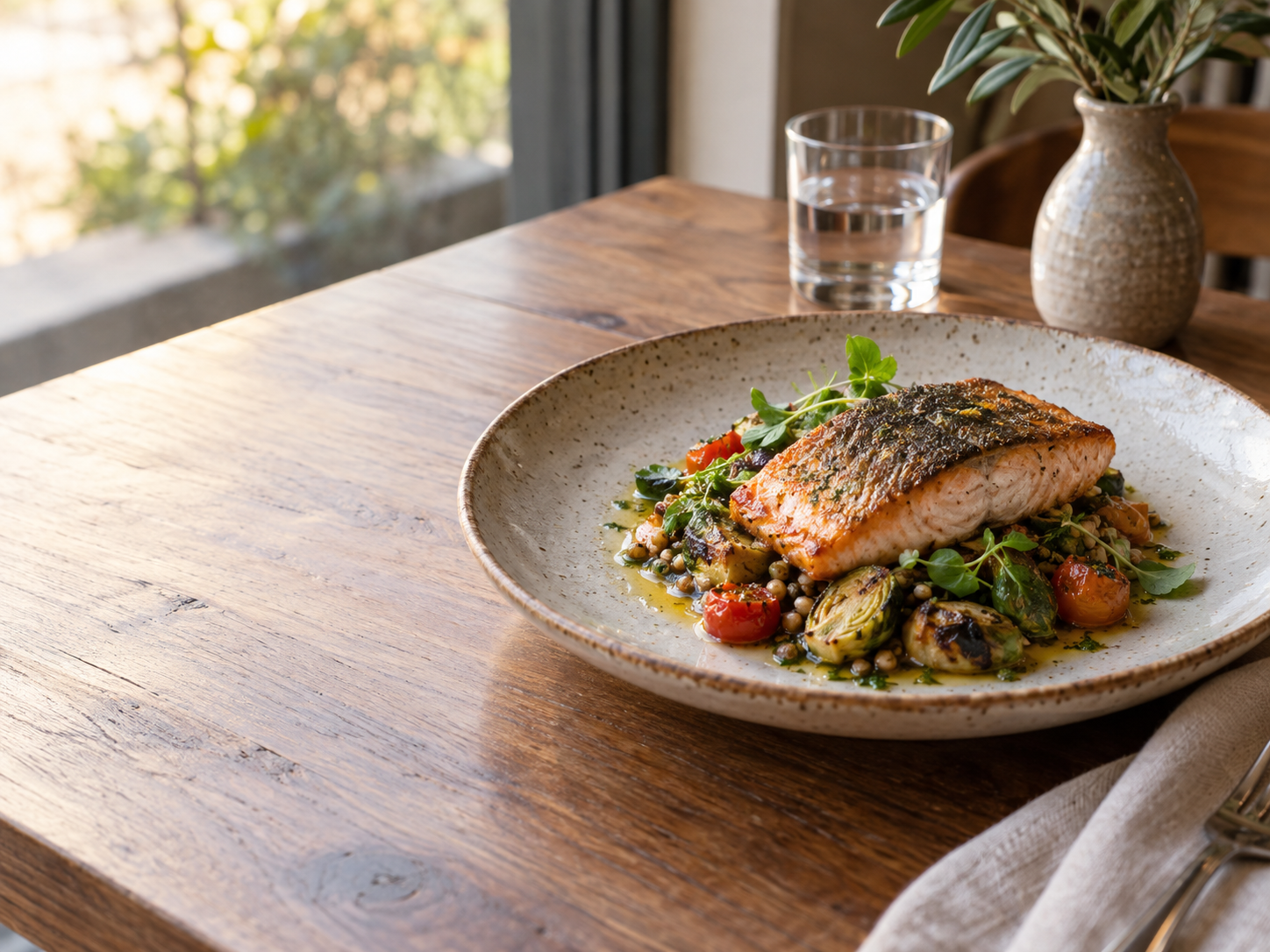
A FoodPhoto.ai public-corpus audit of the pages, tools, guides, delivery specs, cuisines, and local-market coverage restaurants need before using AI-enhanced menu photos in Latin America and Brazil.
This is not a survey of every restaurant in the region, and it does not claim market-share precision. It is a transparent snapshot of the FoodPhoto.ai public WordPress corpus on June 27, 2026: what the site has published for restaurant operators who need truthful AI food-photo workflows, localized delivery guidance, and practical menu-photo resources.
The reason this matters is simple: AI food photography is moving from novelty to operations. A restaurant in Sao Paulo, Mexico City, Bogota, Lima, Santiago, Buenos Aires, Montevideo, or Panama City does not only need a prettier image. It needs a photo that still represents the real dish, fits the delivery channel, survives thumbnail crops, works in Spanish or Brazilian Portuguese, and can be repeated across a changing menu.
Methodology
FoodPhoto.ai reviewed its own published WordPress page inventory, using page status and URL hierarchy as the source of truth. We grouped pages by resource, tool, guide, delivery-spec, cuisine, comparison, and LatAm/Brazil GEO patterns. Counts are intentionally rounded only where the public URL structure is the stronger evidence than a fragile decimal. The snapshot date is June 27, 2026.
The dataset is useful as an editorial map of practical demand signals: which workflows require dedicated guidance, which localization gaps matter, and which markets need city-specific photo advice. It should not be used as a replacement for a platform policy check, sales forecast, or consumer survey.
Dataset snapshot
| Metric | Snapshot value | Scope |
|---|---|---|
| Published WordPress pages in crawlable corpus | 1,723 | FoodPhoto.ai public WordPress pages, publish status, 2026-06-27 |
| English resource pages | 19 | Children of /resources/ |
| Spanish resource pages | 10 | Children of /es/recursos/ |
| Portuguese resource pages | 10 | Children of /pt/recursos/ |
| Tools pages | 33 EN / 9 ES / 9 PT | Tool hubs and localized tool children |
| Guides pages | 20 EN / 20 ES / 20 PT | Photography and delivery menu guides |
| Comparison pages | 18 EN / 10 ES / 10 PT | AI, photographer, stock, phone, lightbox and editing comparisons |
| Localized delivery spec pages | 3 ES / 3 PT | Rappi, DiDi Food, PedidosYa, iFood localized specs |
| Localized cuisine pages | 8 ES / 8 PT | Cuisine guidance including Mexican, Peruvian, Brazilian, Argentine and Colombian food |
| LatAm and Brazil city GEO pages in audited set | 19 | Menu and restaurant photography pages for Mexico, Brazil, Colombia, Peru, Chile, Argentina, Uruguay and Panama markets |
What the data says
1. AI food photography is becoming workflow-specific. The corpus contains calculators, auditors, resizers, compressors, alt-text tools, photo-size checkers, and dish-name idea generators. That mix reflects real operator jobs: judge the source photo, resize it for delivery, keep the dish honest, and publish it across menus, search, and social.
2. Localization is no longer cosmetic. The Spanish and Portuguese clusters are not just translated sales pages. They include resources, tools, guides, comparisons, cuisines, delivery-spec pages, and restaurant photography pages. A Mexican taqueria, a Peruvian cevicheria, a Colombian arepa shop, an Argentine parrilla, and a Brazilian lanchonete all face different dish shapes, garnish norms, delivery crops, and customer expectations.
3. The biggest risk is misrepresentation, not AI itself. Across the corpus, the recommended pattern is enhancement from a real dish photo: improve lighting, background, crop, sharpness, and consistency without changing ingredients, plating, or portion size. That is the line operators should keep when they prepare photos for iFood, Rappi, DiDi Food, PedidosYa, Uber Eats, DoorDash, Google Business Profile, websites, and social channels.
4. City pages show where local context matters. The audited LatAm/Brazil GEO set covers restaurant and menu photography intent across Mexico, Brazil, Colombia, Peru, Chile, Argentina, Uruguay, and Panama. Local pages are useful because the best photo for sushi delivery in Sao Paulo, tacos in Mexico City, rotisserie chicken in Lima, or empanadas in Buenos Aires is not merely a generic square crop.
Editorial takeaways for restaurant teams
- Build a photo QA checklist before generating anything with AI.
- Use real dish photos as the source, not stock or invented plates.
- Keep a separate export for delivery thumbnails, website menus, Google Business Profile, and social posts.
- Localize guidance by language and market, especially when the team operates in Spanish and Portuguese.
- Record which platform each image was prepared for, because review rules and crop behavior change by marketplace.
How FoodPhoto.ai fits the workflow
FoodPhoto.ai is a paid-credit AI food photo studio for restaurants. One credit creates one finished photo, and every finished image should start from a real dish the restaurant serves. FoodPhoto begins with two previews on your own dish, with a verified account and no card. Free previews are significantly slower than paid plans and are prepared in a separate queue: about 30–35 seconds in normal conditions, and longer when the service is busy or the edit is complex. Keep the chat open and do not repeat the request while it processes. See the current plans and usage estimates for photos, menus and campaigns.
Related pages
FAQ
Is this a market survey?
No. It is an original public-corpus audit of FoodPhoto.ai pages and URL clusters as of June 27, 2026. It is useful for editorial planning and workflow analysis, not for claiming total market adoption.
Can restaurants cite this dataset?
Yes, cite the page title, FoodPhoto.ai, and the snapshot date. The page includes Article and Dataset schema so editors and crawlers can understand the scope.
Does AI food photography mean inventing new dishes?
No. The recommended use is to enhance a real dish photo while preserving the ingredients, plating, and portion customers receive.