Free tool
AI Smash Burger Generator
Turn your phone pics of smash burgers into menu-ready photos. Lacy crust preserved, American cheese melted right, sear marks intact — in under a minute per shot.
Try it free — drop a smash burger photo
2 free enhancements per day, no signup required. Lacy edges stay lacy.

Drop your food photo here
or click to browse files
 Instant preview - takes under 30 seconds
JPG, PNG, or WebP up to 10 MB
1 instant preview — see the result, then unlock full-resolution downloads from $3.
How it works
Photograph the burger
Side profile for stack shot, 30° for signature angle, overhead for menu tile.
Apply the smash burger preset
Lacy-edge preservation, cheese-melt specular control, patty-layer sharpening.
Export for every channel
DoorDash, Uber Eats, Instagram, TikTok — all crops in one pass.
Pricing vs a human photographer
| Option | 10-burger menu | Monthly limited-time |
|---|---|---|
| Food photographer | $1,200–$3,500 | $150–$350 per burger |
| FoodPhoto.ai | $2.99 Try Pack + top-ups | 1 credit per shot |
Examples
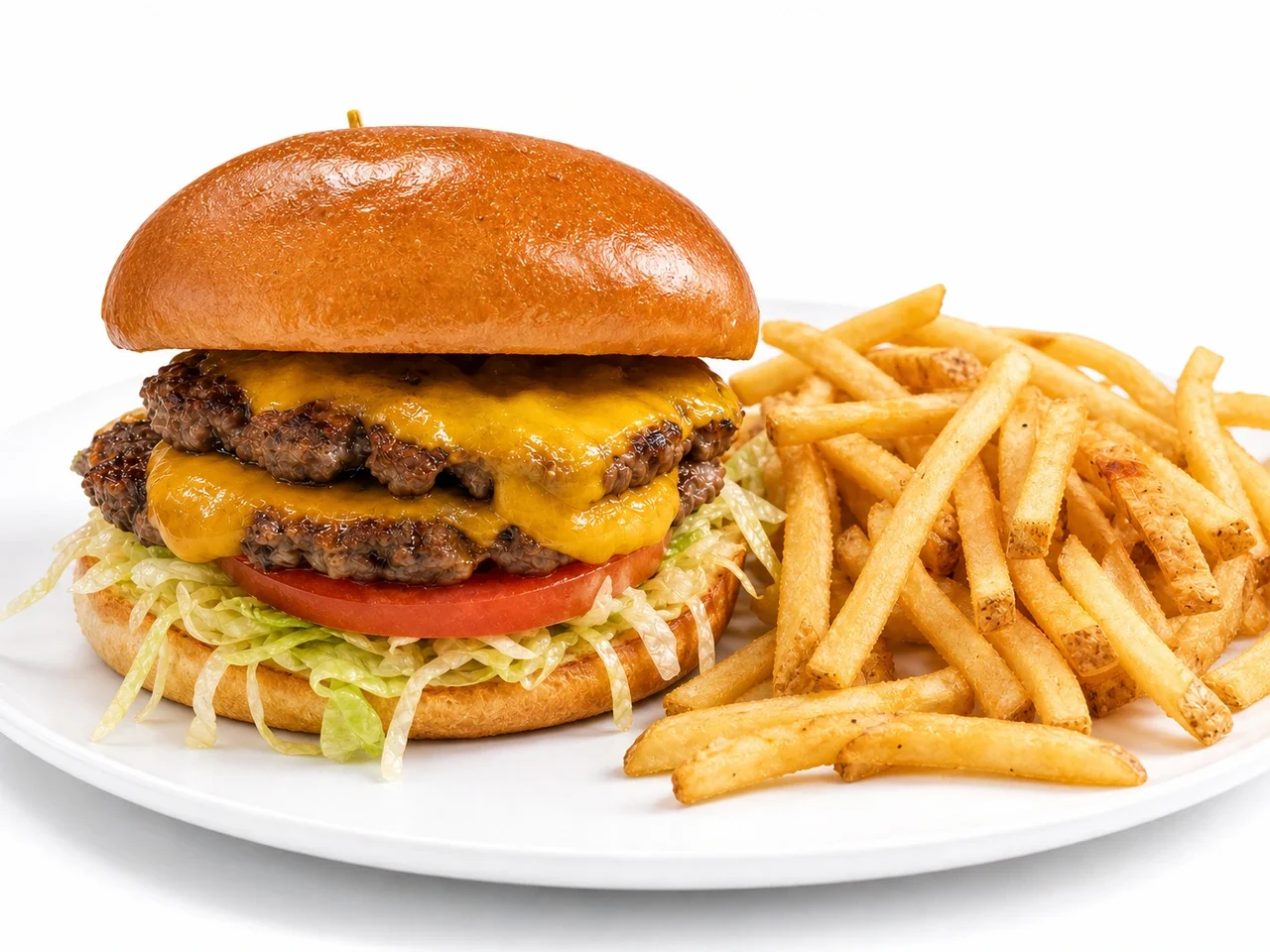
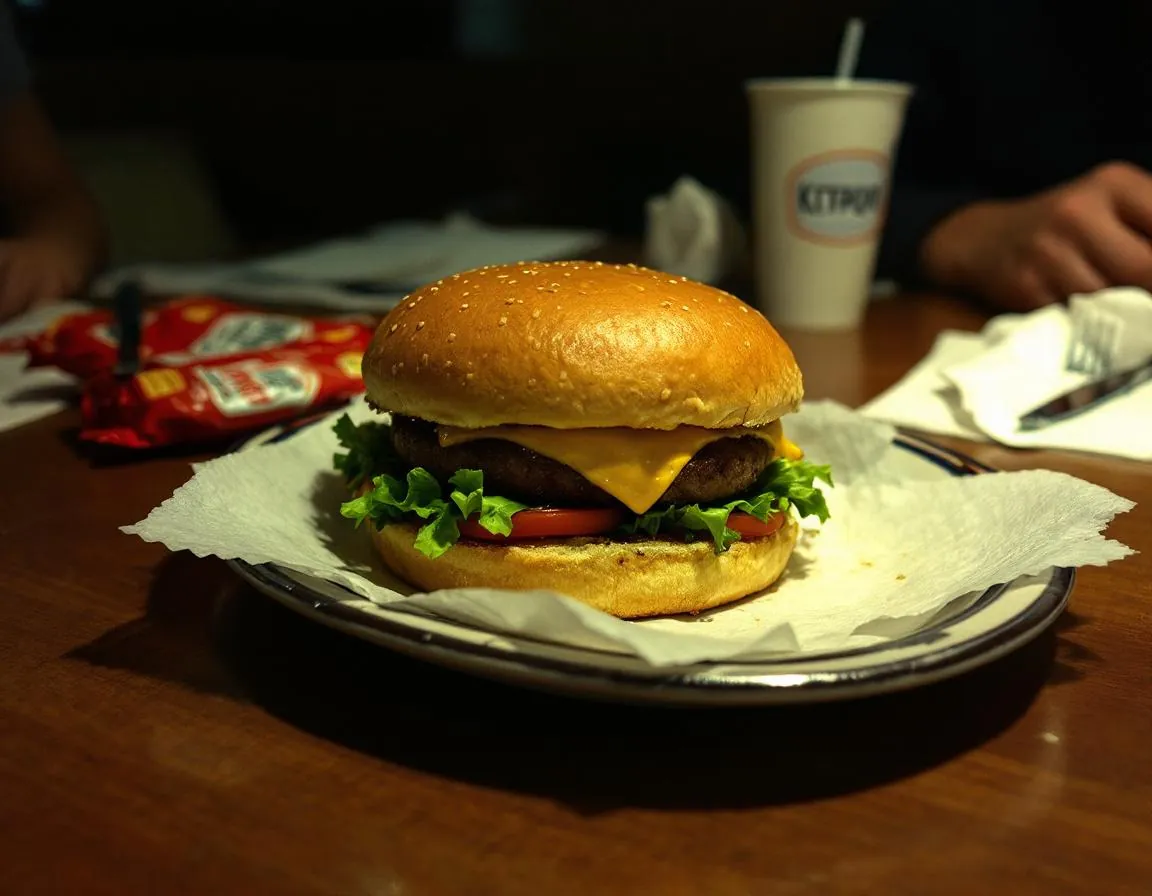
Drag to compare. Lacy crust preserved, cheese melt controlled.
Why smash burgers have taken over the burger category
The smash burger has gone from a 1930s White Castle technique to the defining style of the independent burger renaissance. Between 2018 and 2026, the number of operators identifying primarily as smash-burger specialists grew from a few dozen to thousands of locations across the U.S. and increasingly internationally. The appeal is both culinary and economic: a properly-executed smash burger delivers more Maillard surface area per gram of beef than any other burger style, which translates to more flavor per bite. Economically, smash burgers use less beef per serving (usually 2-4 oz per patty with 2-3 patties stacked) at higher perceived value, which produces better unit economics than traditional pub burgers.
The lacy-crust problem is the core technical challenge in smash-burger photography. When a ball of beef is smashed onto a 450°F flat-top, it spreads irregularly and the beef juices hit the hot surface at the edges, creating a specific irregular crispy border — the "lacy" edge that is the defining visual signature of the style. Phone cameras almost always fail at this. They either blow out the lighter lace (turning crispy browned bits into washed-white) or crush the dark char spots (making the patty read as burnt). Both failures signal to customers that the burger is not a proper smash. The preset preserves the lacy-crust gradient by treating it as a high-frequency detail signal rather than averaging it out, which is the same approach a good food photographer takes with localized sharpening and dodging.
The American-cheese-melt problem is the second technical challenge. American cheese on a smash burger melts into a specific drape — flowing over the edge of the patty with a smooth, slightly glossy finish and retaining a specific yellow-orange color. The meltdown pattern is visible in the photo and it is a conversion signal: customers scrolling smash-burger listings look for the drape to confirm it is a real smash burger versus a generic pressed patty. Phone cameras push the cheese specular too high (making it look plastic and fake) or they dull the yellow-orange (making the cheese look pale). The preset controls specular response and preserves the specific American-cheese color range across Kraft Single, Land O'Lakes, Wisconsin, and other common varieties.
The stacked-patty problem is the third technical challenge. Modern smash burgers are almost always doubles, triples, or quads — which creates a photography depth problem. The side-profile stack shot (the classic smash-burger Instagram aesthetic) has 2-4 patty layers with cheese between each, plus bun, lettuce, sauce, and other toppings. Phone cameras usually focus on the top bun and blur the patty layers, which removes the visual evidence of the stack. The preset uses dimensional sharpening that keeps each patty layer distinct without over-sharpening the whole frame. For cross-channel distribution and adjacent tools, see our AI pizza photo generator, DoorDash food photography, ghost kitchen photo generator, Austin ghost kitchen photos, and Los Angeles Uber Eats photos guides.
The business case for smash-burger operators is distinct because the category is social-media-native. Smash burgers got popular because of Instagram and TikTok — specifically because the stack shot, the cheese drape, and the lacy-edge close-up are three of the most viral food photo templates of the last decade. An operator whose photography fails to deliver these specific shots is literally missing the organic-reach engine that drives the category. The preset produces these shots reliably from phone photos, which unlocks a social-media growth loop that a traditional photography cadence cannot maintain at the speed the category requires. For a smash-burger operator running weekly specials and monthly LTOs, this is the photography workflow the category was always meant to have.
FAQ
Does it preserve the lacy-edge crust?
The lacy crust — the irregular crispy edge where the smashed patty Maillard-browned against the hot flat-top — is the defining visual of a smash burger. Phone cameras handle it badly: they either blow out the lighter lacy parts (turning them into washed-white) or crush the dark spots (making the patty look burnt). The preset preserves the lacy-crust gradient, which is the primary conversion signal for smash-burger customers.
Can it handle American cheese melt correctly?
American cheese melting is specific — it drapes over the edge of the patty with a smooth, slightly glossy finish that differs from cheddar or pepper-jack melts. Phone cameras over-amplify the cheese specular, making it look plastic. The preset controls the specular response and preserves the specific yellow-orange of American cheese (which varies from Kraft Single to Wisconsin to Land O'Lakes).
Will it work for double and triple smash stacks?
Yes. Double and triple smash stacks have a depth problem — layered patties with cheese between each creates an in-focus challenge for phone cameras, which usually focus on the top bun and blur the patty layers. The preset uses dimensional sharpening so each patty layer stays distinct without over-sharpening.
Does this work for major brands like Shake Shack, Smashburger, In-N-Out styles?
The tool is brand-agnostic — it enhances whatever smash burger you shoot. It works for Shake Shack-style (potato bun, ShackSauce, lettuce), Smashburger-style (brioche, multiple patty counts), In-N-Out-style (Double-Double with grilled onion, spread), and the independent-smash-burger scene that has grown to thousands of operators in the last five years.
Is this different from the general AI burger photo generator?
The general burger generator handles pub burgers, smash burgers, gastropub, and fast-food styles with a single preset. The smash-burger-specific tool is tuned for the specific visual signatures that smash burgers depend on (lacy crust, American cheese melt, sear gradient).
Plans from $4.99/mo (20 credits)
Upload your first smash burger now. Menu-grade in 60 seconds.