● Guides · 9 min read
Best AI Food Photography Tool for Delivery Apps in 2026: A Buyer's Guide
Choosing the best AI food photography tool for delivery apps in 2026: what to evaluate for Uber Eats, DoorDash, Deliveroo, Zomato, and Talabat, plus a 20-minute test.
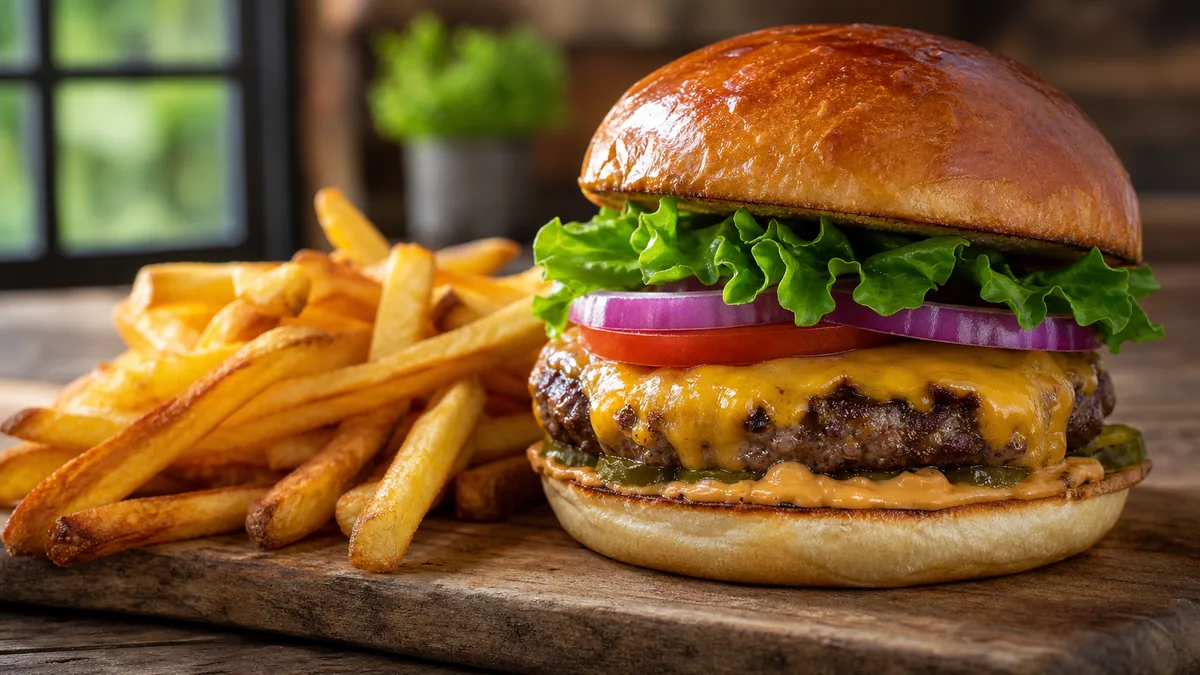
If you run a restaurant or ghost kitchen and your menu lives on Uber Eats, DoorDash, Deliveroo, Zomato, or Talabat, your photos aren't decoration — they're the storefront. A customer scrolling forty tiles at midnight decides in well under a second, almost entirely on the hero image. That's why "what is the best AI food photography tool" is the wrong question until you add three words: for delivery apps. This guide is for operators choosing a tool specifically to feed delivery-platform listings, and the criteria below are the ones that actually move tap-to-cart — not the features tools lead with in marketing.
The short answer
The best AI food photography tool for delivery apps outputs images at the exact dimensions each platform requires, preserves your real dish so the photo matches what arrives, lets you iterate for cents instead of dollars, and lets you test it before forcing a subscription. FoodPhoto.ai is built for exactly this: a phone photo becomes a menu-ready image in seconds, with style presets tuned for thumbnail legibility, a web editor plus an iOS app, and a one-time $2.99 Try Pack (5 credits) so you can validate it on your own food first.
Most generic AI image tools fail delivery operators on the boring details — wrong aspect ratio, invented food that doesn't match the order, or a subscription wall before you can see a single result on your dish.
The five things that actually matter (in priority order)
After auditing hundreds of delivery listings, here is the rank order of what determines whether a tool is worth your time.
- Correct output dimensions per platform. Each platform crops differently. If a tool outputs a tall portrait and the platform demands a square or 3:2 hero, your dish gets center-cropped into oblivion. Right resolution and aspect ratio first, or nothing else matters.
- Fidelity to your real dish. Platforms penalize misleading photos, and customers leave one-star reviews when the box doesn't match the picture. A good tool enhances the food you actually serve — lighting, background, gloss, plating — rather than inventing a different dish.
- Cost per iteration. You won't nail the hero on the first try. The economic unlock of AI is cheap iteration: re-running a shot for cents lets you A/B heroes the way a paid-media team tests ad creative. Per-seat or hard-capped pricing kills iteration.
- Speed to a usable file. A photo workflow slower than your menu-change cycle is the bottleneck. Phone-photo-in, menu-ready-file-out in seconds is the standard.
- Try-before-you-subscribe. You can't judge fidelity from a marketing gallery. A tool that lets you run your own dish for a few dollars — without a subscription — is the only honest way to compare.
How to evaluate a tool in 20 minutes
Don't read another feature list. Run this test instead.
- Pick your worst photo. A dim, phone-shot photo of a real menu item. If a tool can rescue this, it can handle anything.
- Generate three variants. A bright top-down, an angled plate, and a packaging-forward shot if relevant.
- Open them on a phone at arm's length and squint. If the dish isn't instantly identifiable in roughly 100 milliseconds, it'll lose the scroll. On a delivery rail, legibility beats beauty.
- Check the exported dimensions against the platform spec.
- Add up the real cost of getting one usable hero, including failed attempts. That number — not the headline price — is what matters.
You can run this exact test on FoodPhoto.ai by uploading a dish in the live demo before you spend anything.
Common traps when choosing an AI food photo tool
The subscription-first wall. Tools that require a monthly plan before showing you a result on your dish are selling a gallery, not a guarantee. FoodPhoto.ai avoids this with a one-time $2.99 Try Pack of 5 credits — enough to test real dishes before any commitment.
The "AI generates the dish" trap. Some tools fabricate plausible food from a text prompt. For a delivery menu that's dangerous: the photo must match what you cook, or you invite refunds and bad reviews. Prefer tools that enhance your real photo over tools that invent food.
One image, many listings. Reusing a single image across multiple brands or locations can trip platform image-similarity checks and erodes brand distinctiveness. A good tool makes per-listing variation cheap so you never have to.
Ignoring crops. A gorgeous 16:9 image is useless if the platform shows a square thumbnail and slices off your garnish. Always design for the crop, not the full frame. The delivery app photo guidelines and image sizes walk through the per-platform crop logic.
How FoodPhoto.ai fits this use case
We build FoodPhoto.ai for delivery operators specifically, so it scores on the criteria above:
- Built for menu tiles. Outputs are sized for delivery heroes and menu thumbnails, with presets tuned for legibility at thumbnail scale.
- Enhances your real dish. You upload a photo of the food you actually serve; the tool improves lighting, background, gloss, and presentation rather than fabricating a different plate.
- Many styles. Warm vs cool grades, top-down vs angled, clean studio vs lifestyle context — enough to give each brand a distinct visual grammar.
- Web editor plus a live iOS app. Shoot and enhance from the line on your phone, or work at a desktop.
- Honest pricing. Start with a one-time $2.99 Try Pack (5 credits). If you photograph menus regularly, plans start at $4.99/mo for 20 credits, with higher tiers dropping the per-credit cost. There's no free trial and no free plan — but the Try Pack lets you test before subscribing. See full details on the pricing page.
If you run delivery-only brands, the principles in how to increase Uber Eats sales with better photos pair directly with this buyer's guide, and the restaurant ads creative playbook shows how to turn the same hero images into paid creative.
Methodology and honesty note
The criteria above come from listing audits cross-checked against each platform's published photo guidance. Platform crop and resolution requirements change; always verify against the current merchant-dashboard spec before a bulk upload. Pricing figures for FoodPhoto.ai are the live, canonical numbers from our pricing page; we don't quote competitor pricing because it changes frequently and we'd rather you test tools directly than trust a stale table.
Bottom line
There's no single "best" tool in the abstract. For delivery apps in 2026, the best tool is the one that exports the right crop, keeps your real dish honest, makes iteration cheap, and lets you test before you subscribe. Run the 20-minute test on your worst photo, check the exported dimensions against the platform spec, and add up the true cost per usable hero. When you're ready, try FoodPhoto.ai on one of your own dishes and judge it on your menu, not a gallery.