Free tool
AI Salad Photo Generator
Turn phone pics of your salads into menu-ready delivery-app photos. Crisp greens, glossy dressing, distinct toppings — under a minute per shot.
Try it free — drop a salad photo
2 free enhancements per day, no signup required. Crisp greens, real dressing, distinct toppings.

Drop your food photo here
or click to browse files
 Instant preview - takes under 30 seconds
JPG, PNG, or WebP up to 10 MB
1 instant preview — see the result, then unlock full-resolution downloads from $3.
How it works
Shoot the salad
Overhead for composed salads, 30° angle for stacked salads. Natural light, no flash.
Apply the salad preset
Leaf-edge sharpening, dressing gloss, topping color separation, bowl rim balance.
Export for every channel
DoorDash, Uber Eats, Grubhub, Instagram, Google Business Profile — one pass.
Examples
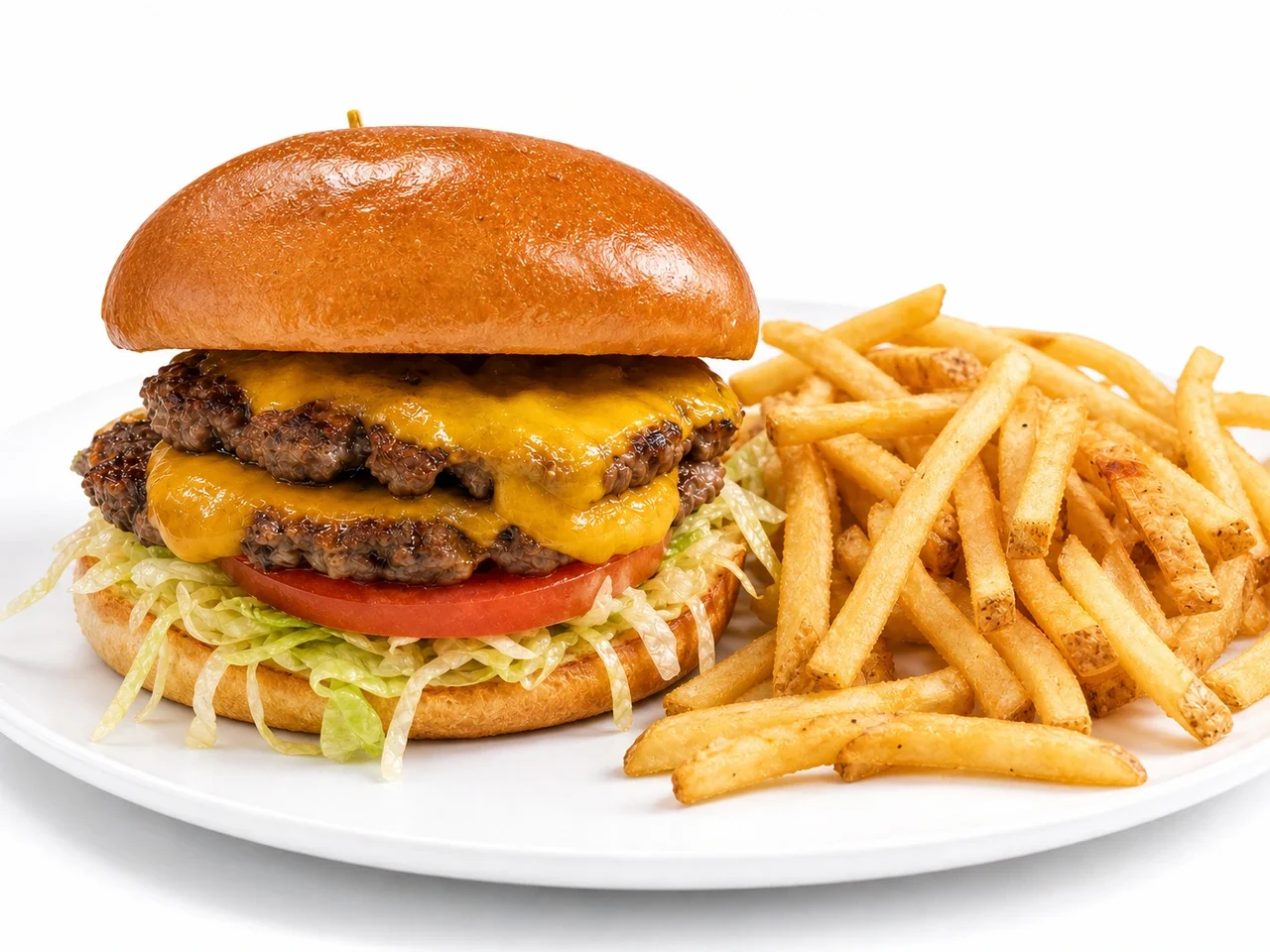
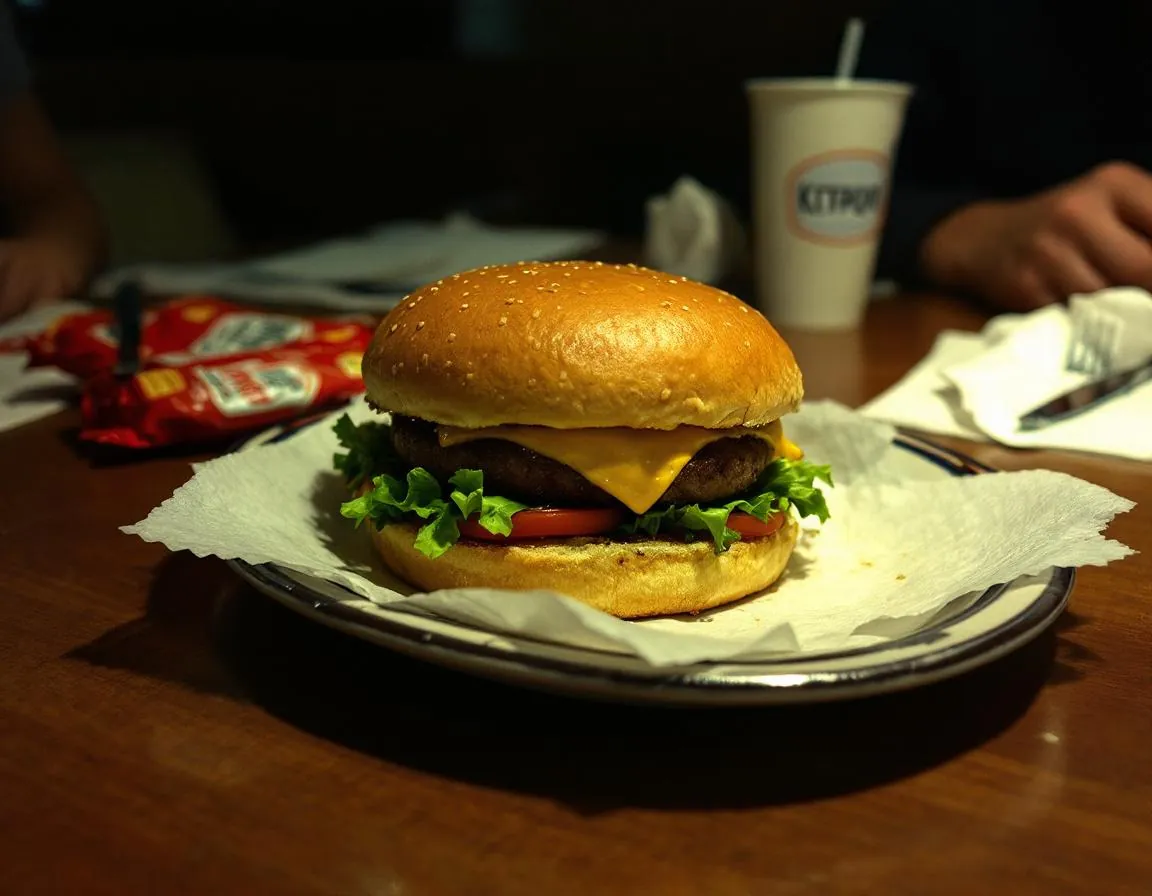
Drag to compare. Caesar, Cobb, Greek, grain — all salads supported.
Pricing vs a human photographer
| Option | Salad shop (15 items) | Seasonal refresh |
|---|---|---|
| Food photographer | $1,200–$3,500 | $100–$250 per shot |
| FoodPhoto.ai | $2.99 Try Pack + top-ups | 1 credit per shot |
Why salad photography is about leaf texture
Salad is the hardest green-dominant plate to photograph and one of the most common on delivery apps. The failure mode is near-universal: phone cameras flatten leafy greens into an indistinct green mass, compress lettuce-edge sharpness into mushy outlines, and either make dressing look wet or make it disappear. A dish that took the chef careful composition to build — the stacked wedge, the shaved parmesan curls, the candied pecans, the avocado fan — ends up on the menu looking like a pile.
The core technical problem is spatial frequency. Leafy green texture lives at very high spatial frequency (the fine edges of each leaf, the veins, the crinkle pattern on kale, the ribbed structure of romaine hearts). Phone cameras and standard image compression target mid-frequency detail and smooth out the high-frequency range, which is exactly where salad texture lives. The salad preset applies edge-aware sharpening targeted at these high frequencies, so a butter lettuce leaf reads as soft-edged and delicate, romaine reads as crunchy-ribbed, and kale reads as textured-curly. Each leaf type gets the right signature back.
Dressing gloss is the second problem. A salad photographed just after dressing looks fresh and appetizing for about 90 seconds — then the dressing starts to pool, leaves start to wilt, and the shot is gone. In practice, most kitchens dress and shoot simultaneously, which means the dressing is at its peak cling when the phone camera fires. The preset preserves that peak: shine where dressing clings to greens, matte where it has pooled, no greasy glare. It is a subtle adjustment but it is the single biggest conversion driver for salad imagery.
Composed salads — Cobb, Niçoise, Greek, wedge — have a third challenge: component separation. These dishes are visual grids with distinct ingredients (egg, bacon, blue cheese, tomato, red onion on a Cobb, for example). Phone cameras tend to average the whole grid into one warm brown-green tone. The preset runs sectional color correction per component, so each ingredient on the grid reads as itself. Buddha bowls and grain salads benefit from the same treatment — see our dedicated healthy bowl photography page for the bowl-specific version.
For salad-focused operators, cross-link to our vegan food photography page (many salad-forward concepts are vegan-leaning), our protein meal photography page (for chicken Caesar and steak salads), and our DoorDash food photography guide for delivery distribution. For mixed menus with pasta and pizza see our pasta tool and pizza tool.
Business case: salad restaurants run lean margins and high menu-change cadence, especially in the fast-casual segment. Sweetgreen and Cava ship new seasonal salads every 4–6 weeks. Matching that refresh rate with traditional photography is impossible on an independent budget. With FoodPhoto.ai the marginal cost of adding a seasonal salad to the menu is essentially zero — you can test and refresh as aggressively as the category demands.
FAQ
What salads work?
Every category. Caesar, Cobb, Greek, Niçoise, wedge, chopped, grain, kale, fattoush, tabbouleh, larb, chicken, tuna, steak. The preset is tuned for tossed, stacked, and composed salads. It handles leafy, grain-based, and protein-forward compositions equally well.
Does it restore crisp-greens detail that phones blur?
Yes — this is the main value. Phone cameras compress the fine edge of a lettuce leaf or kale ribbon, and salads end up looking limp. The preset applies edge-aware sharpening tuned for leafy greens so the texture reads crisp even at thumbnail size.
Will it fake extra toppings or more cheese?
No. We enhance color, light, sharpness, and background. Your salad as photographed is what we enhance. Add more cheese in the kitchen if you want more cheese in the photo — do not trust any tool that invents it.
Does it handle dressing gloss and wet leaves?
Particularly well. Dressing is the hardest element in salad photography because it either looks dry (no shine) or wet (greasy). The preset targets the specular highlight at dressing thickness — shiny where it clings to the greens, matte where it pools in the bowl.
Can I use this for salad-forward chains like Sweetgreen, Chopt, Just Salad?
Yes, and it is especially useful for independent salad shops trying to match the chain visual bar. Sweetgreen and Cava spend millions on food photography. This tool closes the gap without a studio day.
Plans from $4.99/mo (20 credits)
Upload your first salad. Menu-grade in 60 seconds.