

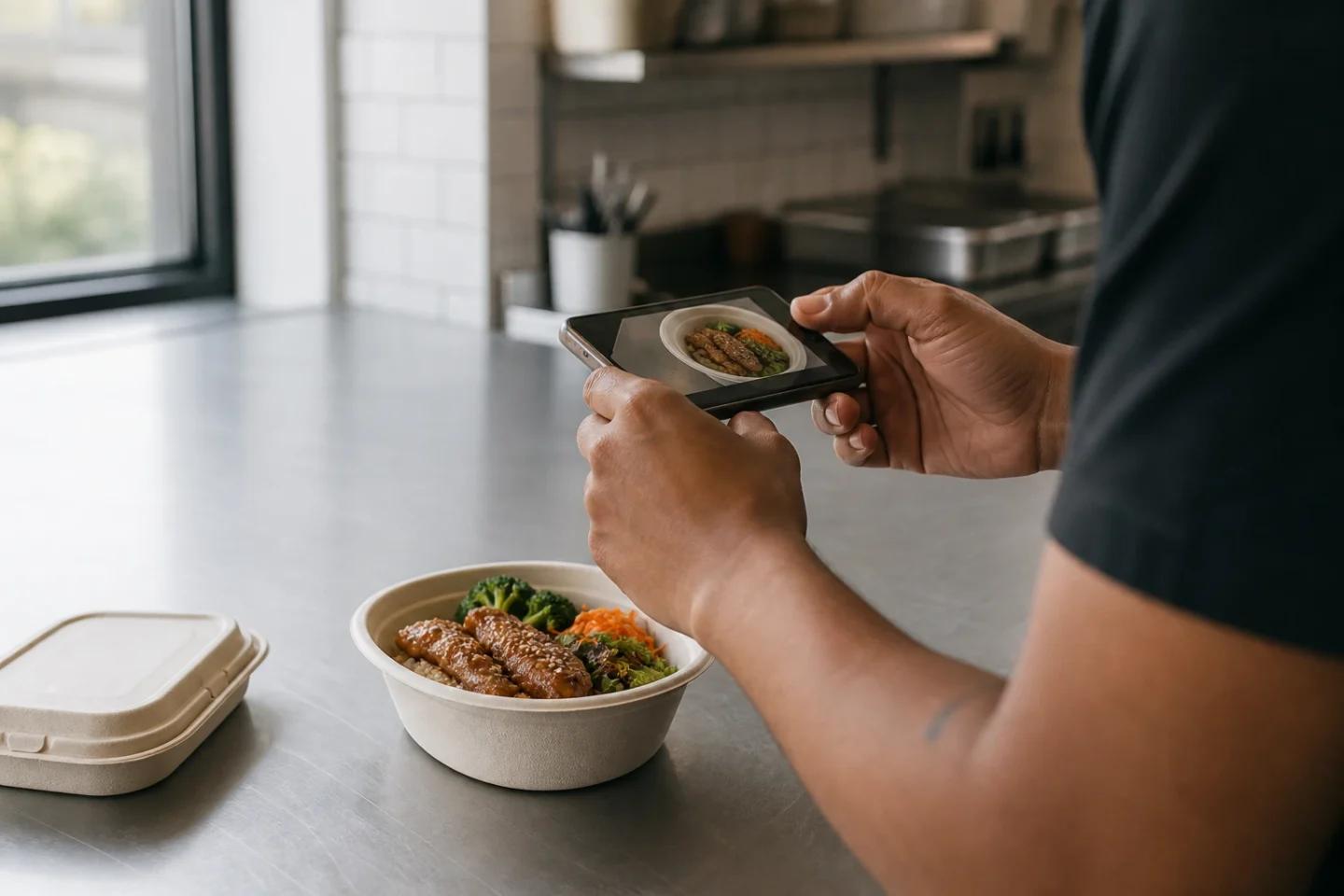
In dark kitchen packaging photos, the guest often opens a sealed box — so the photo should not promise a white-tablecloth plate if that is not the experience.
- Show packaging brand clearly
- Optional open-box reveal that matches reality
- Keep sauce spills and prop theater out
Pairs with ghost kitchen photo system.
Produce packaging-first SKUs on FoodPhoto.ai.
A production-ready method for dark-kitchen packaging photos
Practical answer: Build images that explain the delivered experience as well as the plated food. Optimize for sealed packaging, portion and arrival clarity, then reject any output that makes the menu less accurate. The main avoidable risk is simple: a plated fantasy can disappoint when the customer receives a closed container. This workflow gives a restaurant team an auditable way to move from source photo to approved asset without turning visual polish into an unsupported promise.
Show both appetite and operational reality, especially for bundles and travel-sensitive items.
Step-by-step operating workflow
Make dark-kitchen packaging photos an operating process with a named owner, a release checklist and a small feedback loop. The useful unit is not “photos made”; it is an accurate image approved for the channel and connected to the current menu item. That distinction prevents a fast production system from becoming a fast error system.
- Define the release target. Name the exact item, channel, crop and business purpose before capture or generation begins.
- Build from the real product. Record the current portion, ingredients, vessel or packaging so the creative work has a truth reference.
- Apply one documented visual system. Reuse light, angle, background and export rules while allowing the actual food to remain distinct.
- Review before bulk publication. A kitchen or operations owner checks recipe truth; a marketing owner checks readability and brand consistency.
- Measure and refresh. Save the publication date, test window and reason for the next update. Replace assets when the product changes, not just when a calendar reminder fires.
Release checklist
| Gate | Pass condition | How to verify |
|---|---|---|
| Product truth | The image matches the currently fulfilled order | Compare with recipe, portion and packaging |
| Brand system | Light, color and framing follow the documented style | Review beside two already-approved assets |
| Channel purpose | The crop supports the intended customer decision | Preview in the actual surface |
| Ownership | A named person approved accuracy and release | Record reviewer and date |
| Freshness | The asset still reflects the current menu | Recheck after every recipe or packaging change |
How to evaluate the result without inventing a success claim
Pair selected hero dishes with honest packaging views and audit them after packaging changes. Hold price, availability, promotion and service window as stable as practical. Record the dates and sample size, and describe the result as an observation from that test—not as a universal promise. If several things changed together, the data cannot isolate the photo.
Useful process metrics are approval rate, attempts per approved image, time from capture to publication, rejection rate and the share of live menu items with current imagery. Commercial metrics can include item views, add-to-cart actions or orders when the platform exposes them, but seasonality and promotions must stay in the interpretation.
Accuracy, rights and update policy
Use photos the restaurant owns or is licensed to modify. Do not copy a competitor’s dish, branding or protected campaign image. Keep the food representative of what a customer can order, disclose material synthetic changes when the context requires it, and remove an image when the recipe, portion, vessel or packaging no longer matches.
Evidence rule: Keep the original capture, the approved output and the reviewer decision together. That record lets the team explain what was enhanced and reverse a bad release without guessing.
Editorial review: This operating guidance was reviewed on August 21, 2026. It avoids promised rankings or sales outcomes and should be rechecked against the live channel before a bulk upload.
Put the workflow into practice
Start with one representative dish in FoodPhoto Studio, compare the result with the original, and review real transformation examples before standardizing a look. For a larger catalog, estimate approved-image cost from the current FoodPhoto pricing and include staff review time in the calculation.


