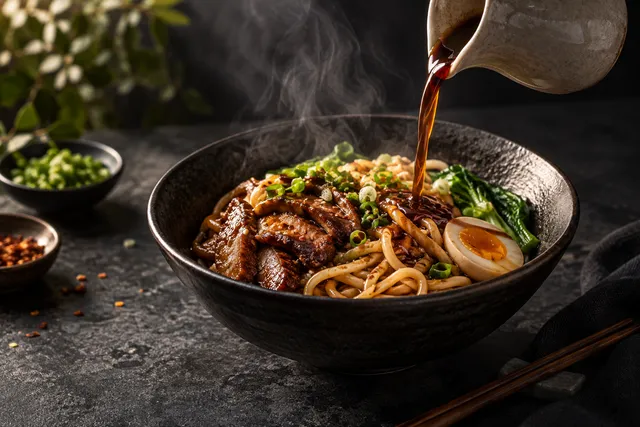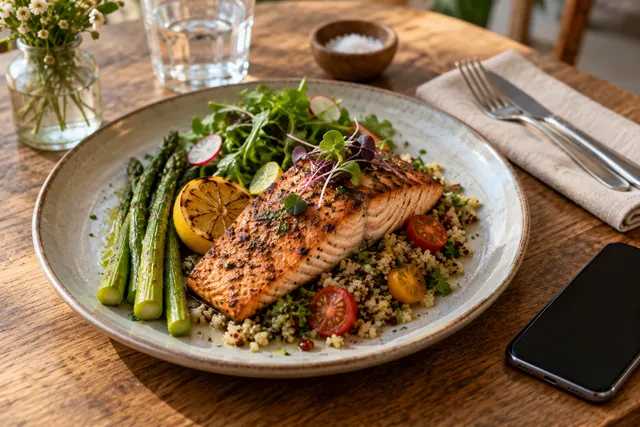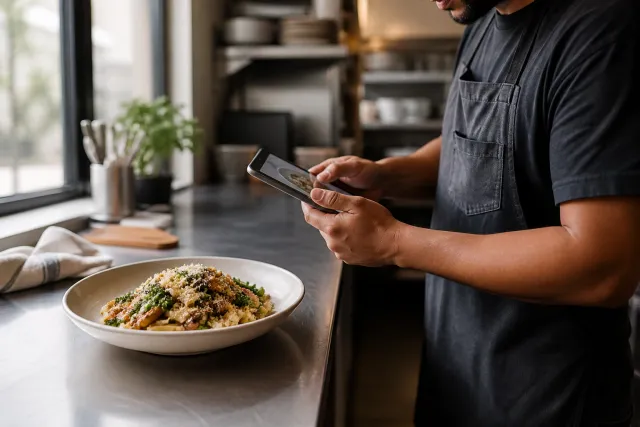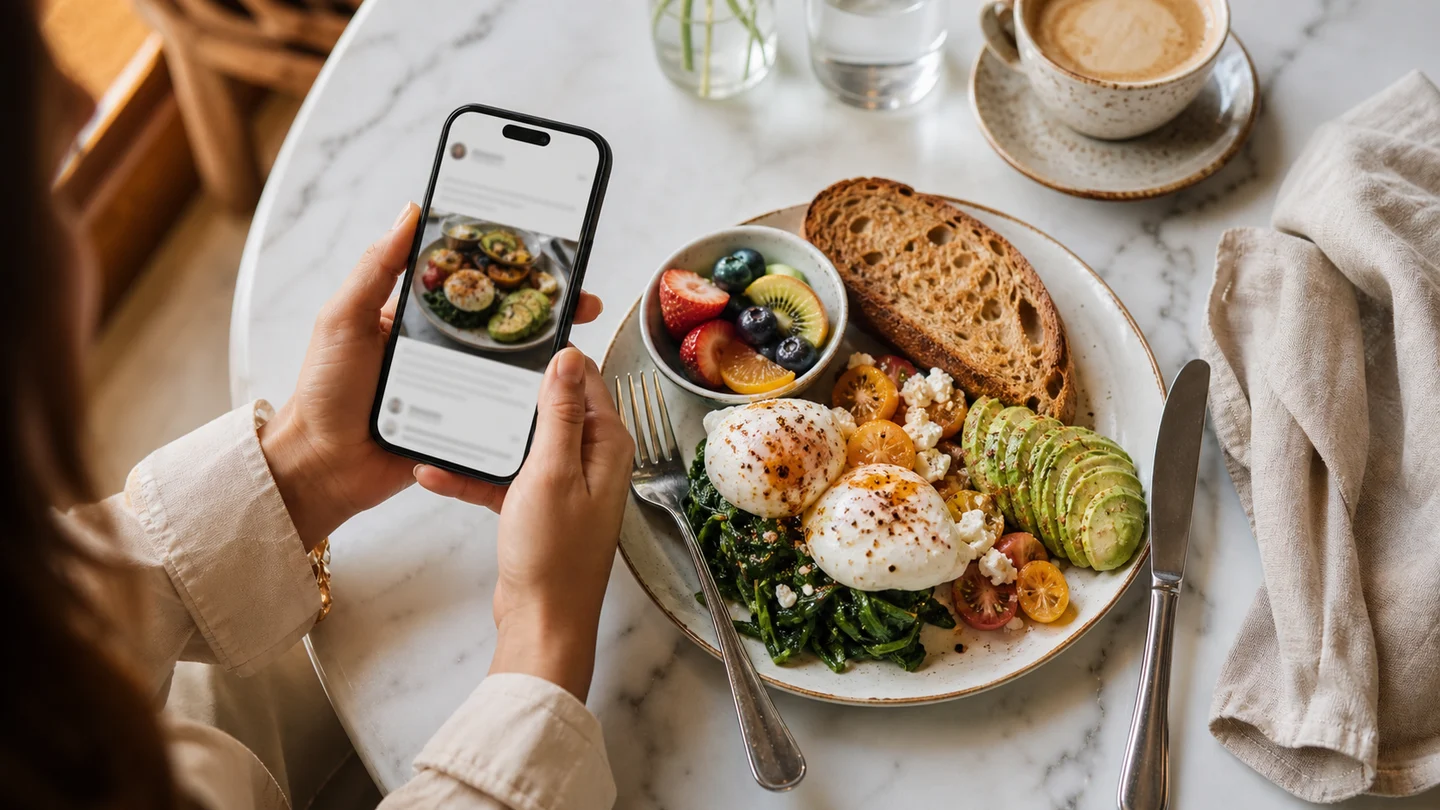
A great food photo gets the tap. The caption gets the order. Yet most restaurants pour effort into the image and then type “Yummy 😋 #foodie” underneath it — throwing away the one place you can actually say what the dish is, why it’s worth it, and what to do next. In 2026, AI makes writing those captions fast and consistent, but only if you brief it well. Here’s how to generate food captions and menu copy that convert, without sounding like a robot wrote them.
The short answer
AI is excellent at food captions when you feed it three things: the real dish details, the platform, and the goal of the post. Give it the actual ingredients and a price or offer, tell it whether it’s for an Instagram post, a delivery-app description, or a Google Business update, and tell it whether you want saves, orders, or reservations. Generic “make it catchy” prompts produce generic captions. FoodPhoto begins with two previews on your own dish, with a verified account and no card. Free previews are significantly slower than paid plans and are prepared in a separate queue: about 30–35 seconds in normal conditions, and longer when the service is busy or the edit is complex. Keep the chat open and do not repeat the request while it processes. See the current plans and usage estimates for photos, menus and campaigns.
Why captions are the most-wasted real estate in food marketing
The photo stops the scroll in about 100 milliseconds. But the photo can’t tell the viewer the cheese is aged 18 months, that it’s available only on weekends, or that ordering takes one tap. Caption copy is where you convert interest into action — and where AI saves you the most time, because the format repeats across dozens of dishes.
The anatomy of a food caption that converts
Whether a human or an AI writes it, a high-performing caption usually has four parts:
- A sensory hook — one concrete, specific detail (the crackle, the pull, the char), not a vague adjective like “delicious.”
- The substance — what it actually is: key ingredients, preparation, what makes it different.
- A reason to act now — limited run, daily special, a price, a combo, “today only.”
- A clear call to action — order on the app, link in bio, book a table, ask for it by name.
How to prompt AI for captions that don’t sound generic
The quality of the caption is the quality of your brief. Use a template like this:
- Dish + real details: “Smash burger, two aged-beef patties, house pickles, brioche bun, $12.”
- Platform + length: “Instagram caption, 2–3 short lines, then 5 relevant hashtags.” Or “Uber Eats item description, under 140 characters, no hashtags.”
- Brand voice: “Warm and a little cheeky, no exclamation-point spam, no emoji overload.”
- Goal: “Drive same-day orders.” Or “Drive saves and shares.”
- Ask for options: “Give me 5 variations so I can pick.”
That brief produces usable copy on the first try. “Write a caption for this burger” does not.
Match the caption to the channel
Instagram / TikTok
Lead with the sensory hook, keep it short, put the CTA on its own line, and use 4–6 specific hashtags (a mix of dish, cuisine, and city) rather than 30 generic ones.
Delivery apps (Uber Eats, DoorDash, Deliveroo)
Item descriptions are search-and-scan text, not poetry. Front-load the ingredients people search for, stay under the character limit, and skip hashtags and emoji. The photo does the seducing; the words do the filtering. (See our delivery-app guidelines for the visual side.)
Google Business Profile
Write like a local result: dish name, a plain-language description, and a clear next step (order, call, directions). This is discovery copy, so include the words a nearby diner would actually type.
The line you should not cross
AI will happily write that a dish is “the best in the city” or invent an award. Don’t ship claims you can’t back up — they erode trust and, on some platforms, violate the rules. Keep the copy specific and true; specificity is more persuasive than hype anyway. The same honesty principle applies to the photo, which is why we recommend enhancing your real dish rather than generating a fake one (more in our trust-safe photo policy).
A repeatable weekly workflow
- Shoot or enhance the dish photos for the week in one batch.
- Write one strong brief with your brand voice and reuse it for every dish, swapping only the ingredients and offer.
- Generate 5 caption options per dish, pick one, tweak a word.
- Schedule across channels, adapting length per platform.
Two hours, a month of content, and a consistent voice across every post.
Frequently asked questions
Will AI captions hurt my reach or look spammy?
Only if you let AI write filler. Specific, on-brand captions with real details perform like any good human copy. The platforms care about engagement, not authorship.
How many hashtags should a food post use?
On Instagram, 4–6 targeted tags beat 30 generic ones. On delivery apps and Google, none — use searchable ingredient words instead.
What comes first, the photo or the caption?
The photo — it earns the attention the caption converts.
Bottom line
Captions are where the order actually happens, and AI makes great ones fast — if you brief it with the real dish, the platform, and the goal. Pair specific, honest copy with a photo that stops the scroll, and you’ve turned a feed post into a storefront. Start with the photo, then let the caption close.