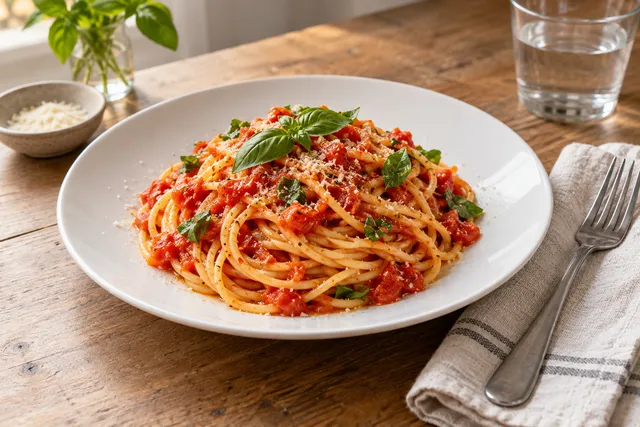
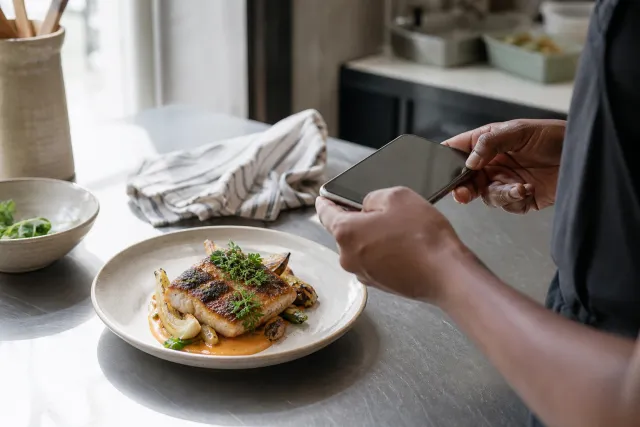
The same dish photographed on three different plates can look like three different menu items. A dark slate plate makes a pale dish pop and a dark stew disappear. A wide white rim adds space and calm. A deep bowl hides the bottom of the portion and can make a full serving look small.
The vessel decides half the photograph. Choose it deliberately, then use the same family of plates across the whole menu so the set looks like one restaurant.
Quick answer
Pick a vessel that contrasts with the food, has enough rim or margin to frame it, and matches the size of the real portion. White or off-white matte plates are the safest default for a full menu. Dark plates flatter pale and colourful dishes but swallow brown and dark sauces. Deep bowls work for soup and noodles, and fight against anything you want the guest to see in full.
The three decisions that matter
| Decision | What it changes | Working default |
|---|---|---|
| Colour | Contrast with the food and the background | Light neutral for most dishes; dark only for pale food on a light table |
| Rim and margin | How much space frames the dish | Enough rim that the food does not touch the edge of the frame |
| Depth and size | Whether the portion reads as generous or small | Use the size the kitchen actually serves |
Colour: contrast beats decoration
- Light plates, light food: low contrast. A pale risotto on a white plate in a bright room can look washed out. A coloured or textured background fixes it more safely than a dark plate.
- Light plates, dark food: the safest combination. Stews, grilled meat, chocolate desserts and dark sauces read clearly.
- Dark plates, light food: strong and modern, but the dish needs its own internal contrast or it looks like a white shape on a black field.
- Dark plates, dark food: usually a mistake. The food loses its edges and the photo turns into a brown rectangle.
- Coloured plates: risky across a menu. A single green plate can look intentional next to one dish and accidental next to another.
Rim, size and the delivered container
Two practical rules keep the menu honest and the photos easy to crop:
- Photograph the dish in the vessel the guest receives. If a curry is delivered in a foil tray, photographing it in a ceramic bowl creates a mismatch the customer notices at the table. This is the same principle behind our portion and honesty guide.
- Match the vessel to the portion. An oversized plate makes a normal portion look mean; an undersized plate makes it look cramped. Use the real serving size and the real plate.
Rim also creates the safe area that delivery tiles need. A plate that fills the frame edge to edge has nowhere for the platform's badges to land. Our guide to thumbnail safe areas explains the framing consequence.
Depth: what a bowl hides
Deep bowls are convenient in service and difficult in photography. They hide the base of the portion, compress the layers and put the most interesting part of the dish below the rim.
| Vessel | Best for | Watch out for |
|---|---|---|
| Flat plate, wide rim | Most composed dishes, menu heroes, tiles | Portion can look small if the plate is oversized |
| Shallow bowl | Pasta, grain bowls, curries you want visible | Shadows inside the bowl can hide the base |
| Deep bowl | Soup, noodles, ramen | Hides portion; steam can fog the lens side of the frame |
| Board or slate | Shared plates, bread, cheese, grilled items | Hard highlights and no rim for margin |
| Takeaway container | Delivery items that ship in it | Reflections from glossy lids; branding you may not want in frame |
Worked example (illustrative)
A restaurant shoots a mushroom risotto. On a white plate in a bright room, the pale rice blends into the pale plate and the pale table; the dish looks like a texture, not a meal. On a dark slate plate on the same table, the risotto has clear edges and the herbs read. But the same slate plate makes the dark braised beef on the next page look like a shadow.
The workable answer is not one plate for everything. The risotto goes on a light plate with a coloured background and a tighter crop; the braised beef stays on the light plate with more contrast in the garnish. The menu set stays consistent because the plate family, the angle and the light stay the same. This example is illustrative.
Keeping a menu consistent across dozens of dishes
- Choose one plate family in two or three sizes, and use it for most of the menu.
- Keep one angle and one light for the set. Consistency is what makes a menu feel designed.
- Allow one deliberate exception. A signature dish on a different vessel can act as a feature image, as long as the difference looks intentional.
- Write it down. A short style note that says which plate, which angle and which background keeps new dishes matching old ones. The restaurant photo style guide covers that document.
- Check the tile. A plate that looks elegant at full size can become an unreadable circle at thumbnail size.
Limitations
- Buying plates for photography is not free, and commercial kitchens break plates. Choose vessels that can also survive service.
- Some dishes are inseparable from their container, such as a hot pot, a tagine or a foil delivery tray. In that case the vessel is part of the dish and should stay.
- A vessel cannot rescue a dish that is badly lit or badly framed. Fix the light and the crop first, as described in our lighting guide.
- Rented or borrowed props can look staged next to everyday service ware. Consistency with what guests actually receive matters more than elegance.
- Do not use a smaller plate to make a portion look larger, or a larger plate to make a dish look lighter. The photo has to match the plate the guest gets.
Frequently asked questions
What colour plate is best for food photography?
Light neutral plates are the safest default because they contrast with most food and keep a menu consistent. Dark plates work well for pale dishes but should be avoided for dark sauces and stews.
Should I photograph food in the takeaway container?
If the guest receives the dish in that container, yes. Photographing a delivery item in ceramic tableware creates a mismatch that customers notice immediately.
Do bowls make portions look smaller?
Deep bowls hide the base of the portion and can make a full serving look smaller, especially from a high angle. Shallow bowls or plates show the dish more completely.
How many plates do I need for a menu shoot?
One family in two or three sizes covers most menus. Add one or two deliberate feature vessels for signature dishes rather than buying a different plate per item.
Does the plate affect how a delivery app crops my photo?
Yes. A plate with visible margin gives the platform's crop and overlays somewhere to land. A plate that touches the frame edges leaves the interface covering the food.
Next step
Line up your three most-ordered dishes on the plates you actually serve them in, photograph each one from the same angle under the same light, and compare them side by side at thumbnail size. The set that looks like one restaurant wins. When you have honest source photos, the FoodPhoto studio can tidy the background and crop for each channel, and the plans page lists what each plan includes.