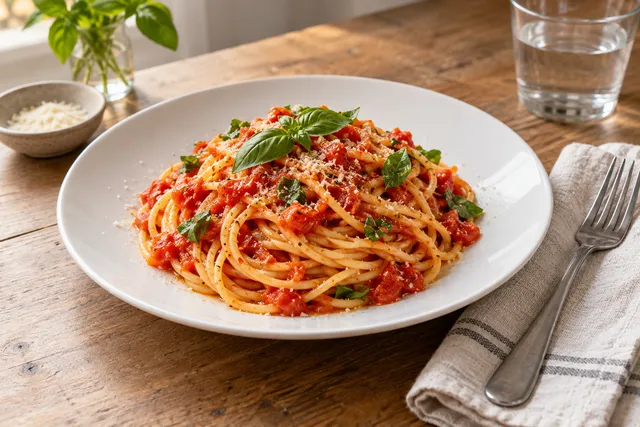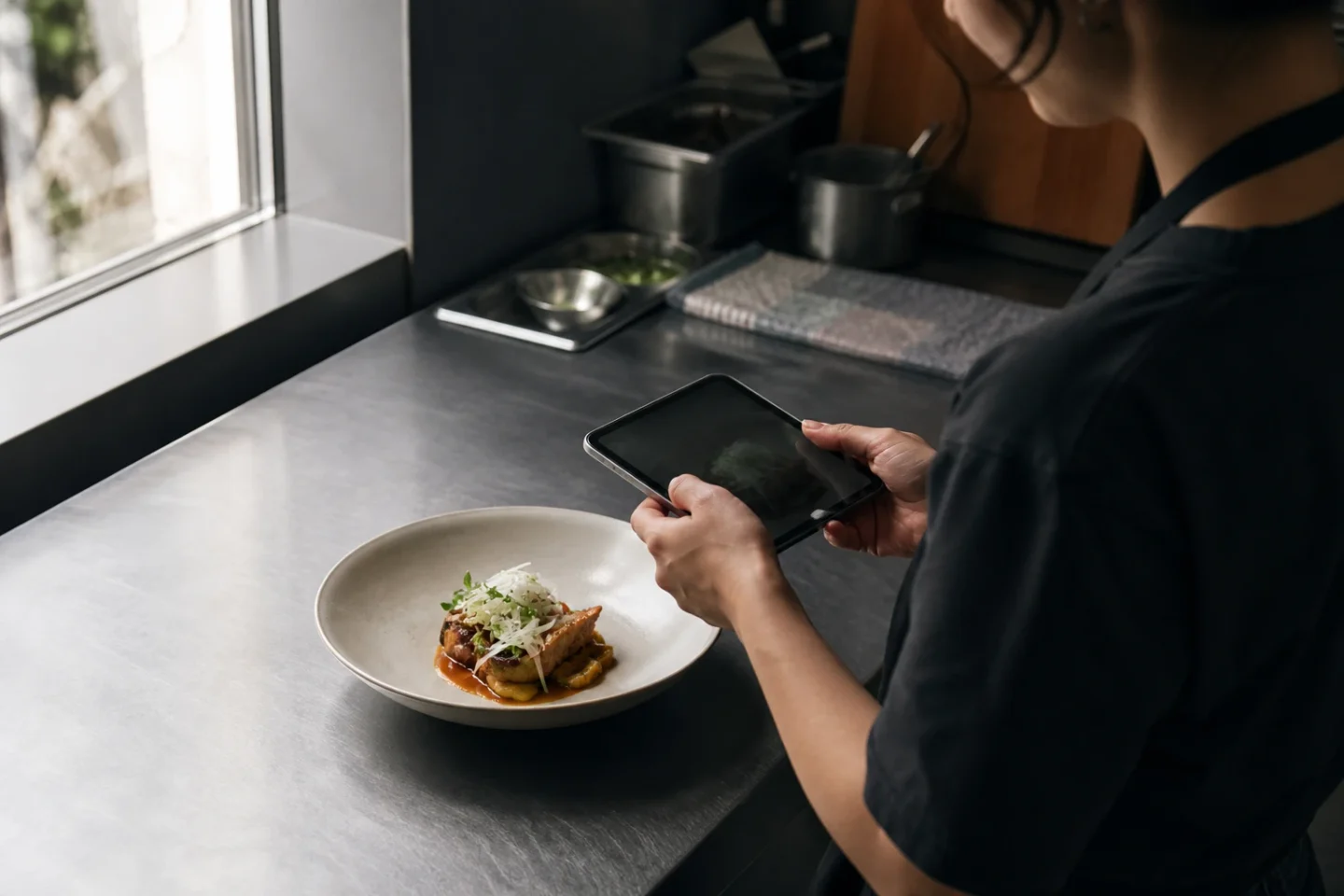
AI food photos help restaurants fill missing SKUs, refresh seasonal specials, and keep delivery menus consistent — if you treat them as production, not magic.
When AI food photos win
- Ghost kitchens with no photogenic pass
- Large menus that never get a full studio day
- Weekly specials that expire before a photographer arrives
- Multi-location brands that need one look
Trust rules
- Match the real plate guests receive
- Do not invent toppings or portion size
- Keep lighting family consistent across the menu
- Document your policy for staff and platforms
Related
Create restaurant-grade AI food photos on FoodPhoto.ai.
A production-ready method for AI food photos for restaurants
Practical answer: Build a house policy for realistic enhancement. Optimize for menu trust, repeatability and staff approval, then reject any output that makes the menu less accurate. The main avoidable risk is simple: unreviewed outputs can promise ingredients or portions that are not served. This workflow gives a restaurant team an auditable way to move from source photo to approved asset without turning visual polish into an unsupported promise.
AI can improve presentation; it cannot replace the restaurant’s responsibility for accuracy.
Step-by-step operating workflow
Treat AI as a controlled finishing stage, not as permission to invent the meal. Capture the real dish first, select a source where its edges and ingredients are readable, and use that image to anchor every version. If the model changes what the customer buys, the output has failed even when it looks polished.
- Capture an honest reference. Use the current plate, portion, container and garnish. Clean the lens and remove clutter before asking software to repair the scene.
- Define the permitted change. Background cleanup, more even light and a consistent surface are normally safer than changing the food itself.
- Generate alternatives, not assumptions. Produce a small set, compare each to the source and discard variants with new ingredients, impossible geometry or fake volume.
- Approve at two sizes. Inspect ingredient truth at full resolution, then inspect recognition and crop safety at delivery-thumbnail size.
- Archive the decision. Keep the input, chosen output, export and reviewer name so the menu can be corrected when a recipe changes.
Release checklist
| Gate | Pass condition | How to verify |
|---|---|---|
| Dish identity | Ingredients, portion and vessel match the source | Side-by-side visual review |
| Geometry | Plates, cutlery, glass and packaging have believable shapes | Inspect hands, rims, reflections and repeated textures |
| Color | Food looks appetizing without hiding doneness or freshness | Compare with a neutral-screen source |
| Channel fit | The approved image remains clear after the required crop | Preview at real listing size |
| Traceability | The team can find the real input and approval record | Use a versioned asset folder |
How to evaluate the result without inventing a success claim
Require a named operator to compare every final image with the current recipe and plating spec. Hold price, availability, promotion and service window as stable as practical. Record the dates and sample size, and describe the result as an observation from that test—not as a universal promise. If several things changed together, the data cannot isolate the photo.
Useful process metrics are approval rate, attempts per approved image, time from capture to publication, rejection rate and the share of live menu items with current imagery. Commercial metrics can include item views, add-to-cart actions or orders when the platform exposes them, but seasonality and promotions must stay in the interpretation.
Accuracy, rights and update policy
Use photos the restaurant owns or is licensed to modify. Do not copy a competitor’s dish, branding or protected campaign image. Keep the food representative of what a customer can order, disclose material synthetic changes when the context requires it, and remove an image when the recipe, portion, vessel or packaging no longer matches.
Evidence rule: Keep the original capture, the approved output and the reviewer decision together. That record lets the team explain what was enhanced and reverse a bad release without guessing.
Editorial review: This operating guidance was reviewed on August 21, 2026. It avoids promised rankings or sales outcomes and should be rechecked against the live channel before a bulk upload.
Put the workflow into practice
Start with one representative dish in FoodPhoto Studio, compare the result with the original, and review real transformation examples before standardizing a look. For a larger catalog, estimate approved-image cost from the current FoodPhoto pricing and include staff review time in the calculation.