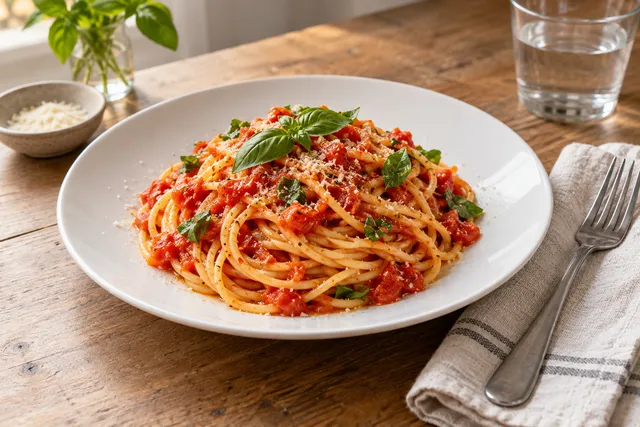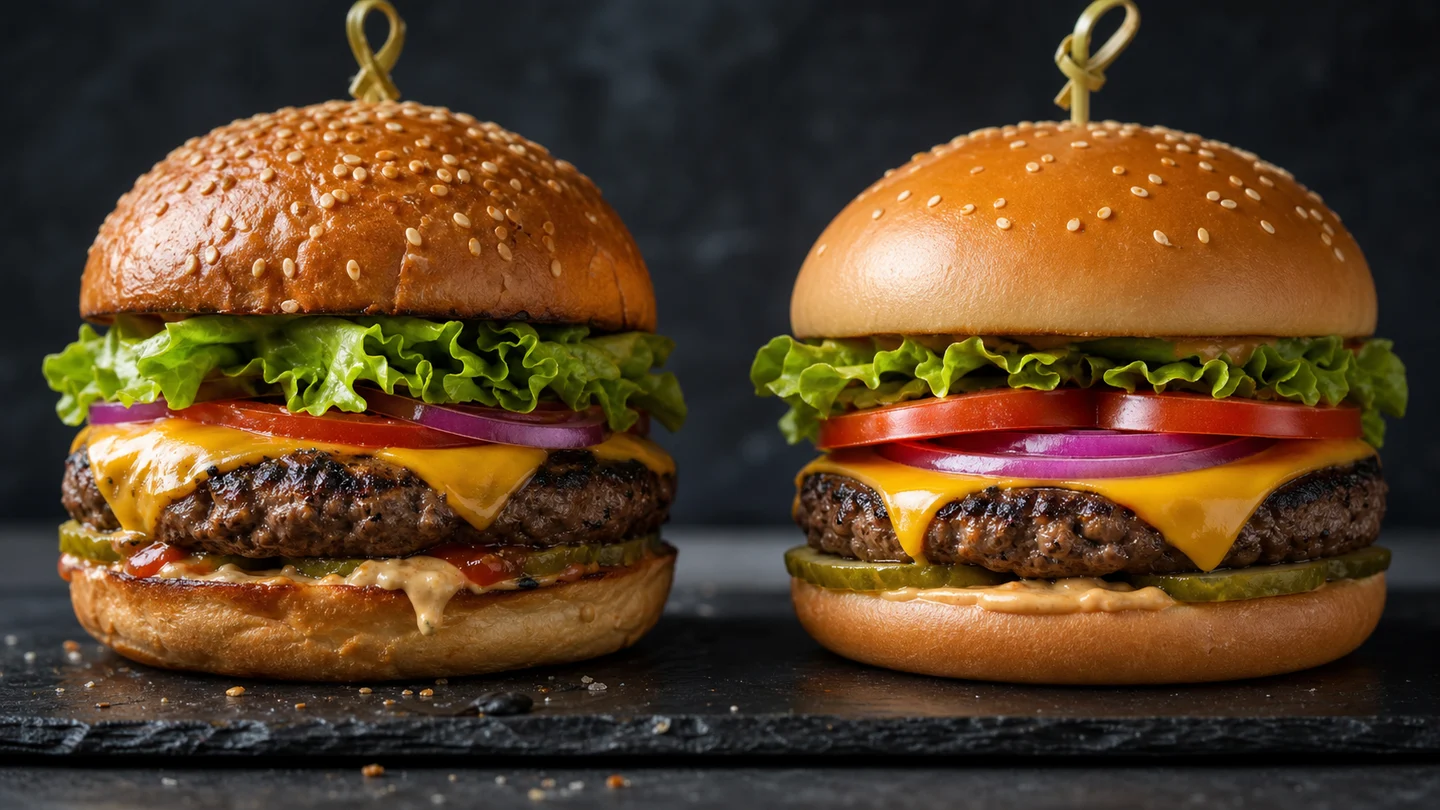
Customers have gotten good at smelling a fake. A food photo that’s a little too perfect — impossibly symmetrical sesame seeds, sauce with no drips, steam that defies physics — now reads as “AI” and quietly kills trust. For restaurants, that’s the real risk of AI food imagery: not that it’s AI, but that it looks AI. This is a practical checklist for spotting the artifacts that give a generated photo away, so the images you publish look like what they should be — photographs of real food.
The short answer
AI food photos get caught when they’re fabricated from a text prompt; they pass when they’re enhanced from a real photo of the actual dish. Pure text-to-image food invents textures, counts, and physics it doesn’t understand — that’s where the tells come from. Starting with a real photo eliminates most of them at the source. FoodPhoto.ai works this way by design: it enhances your real plate rather than inventing one, which is why the output reads as a photograph. You can test it on your own dish with a a $5 pack of 10 photos and judge the realism yourself.
The realism checklist: 9 tells of an AI-looking food photo
Run any food image — yours or a vendor’s — through these. The more boxes it ticks, the faker it looks.
- Impossible repetition. Sesame seeds, herbs, or sprinkles that are too evenly spaced, or identical-looking across the image. Real garnish clusters and scatters.
- Melted or merged details. Fork tines that fuse, a glass rim that dissolves into the table, text on packaging that’s gibberish. Edges are where generators fail.
- Physics-defying steam, sauce, and drips. Steam with no source, sauce that pools unnaturally, a drip frozen mid-air. Real liquids obey gravity.
- Plastic gloss. Everything coated in the same uniform sheen — the “candle wax” look — instead of varied, material-specific reflections.
- Wrong portion logic. A burger with eight patties, noodles that loop into knots, fillings that don’t add up. Generators don’t count.
- Background that doesn’t belong. Cutlery pointing nowhere, a hand with the wrong number of fingers, props at impossible scale.
- Over-perfect symmetry. Real plating has asymmetry and small flaws; flawless mirror symmetry reads synthetic.
- Mushy or hyper-sharp texture. Either smeared, detail-free surfaces or unnaturally crisp micro-texture everywhere at once.
- It doesn’t match the dish you serve. The ultimate tell — the photo shows a dish the kitchen can’t reproduce. Customers notice on delivery.
Why these artifacts happen
Text-to-image models paint a statistically likely image from a prompt; they don’t model the real world. They don’t know how many patties a burger has, that steam rises from heat, or that your sesame bun has a specific seed pattern. So they approximate — and the approximation breaks down exactly at counts, edges, text, and physics. Enhancing a real photo sidesteps this: the patty count, the seed scatter, and the steam are already correct because a camera captured them. The AI only improves lighting, background, and framing.
The honesty test that matters more than realism
Even a flawless-looking AI image fails if it shows food you don’t serve. Two checks before you publish:
- Can the kitchen reproduce this exact plate? If not, don’t use it — the gap shows up at the door as one-star reviews.
- Would it survive a side-by-side with the real dish? Put the photo next to the actual plate. If a customer would feel misled, it’s the wrong image, no matter how good it looks.
This isn’t just ethics — delivery platforms penalize misleading photos, and trust is the cheapest marketing you have. We go deeper in our trust-safe AI photo policy and on whether AI food photography is allowed for restaurants.
How to make AI photos that don’t look like AI
- Start from a real photo of the actual dish, not a text prompt.
- Keep the food, change the conditions. Improve lighting, background, and framing; leave the dish’s identity intact.
- Avoid maximalist “perfection.” A little asymmetry and natural imperfection reads as real.
- Zoom in before publishing. Inspect edges, text, and garnish at 100% — that’s where tells hide.
- Match it to the plate. Final gut check against what the kitchen actually sends out.
Frequently asked questions
Can people really tell when a food photo is AI?
Increasingly, yes — and even when they can’t name why, an “off” image lowers trust and tap-through. Avoiding the artifacts above keeps your photos in the believable zone.
Is enhancing a real photo with AI considered “fake”?
No more than a photographer adjusting lighting and background. As long as the dish stays the dish you serve, it’s a better photograph — not a fabrication.
What’s the safest way to use AI for menu photos?
Enhance real photos of real dishes, then run the realism and honesty checks above. You can try it on your own food with a a $5 pack of 10 photos and inspect the result before anything goes live.
Bottom line
AI-looking food photos get caught at counts, edges, physics, and gloss — the things generators invent. Start from a real photo, enhance rather than fabricate, and zoom in before you publish. Do that and the only thing customers notice is that your food looks great. Test the realism on your own dish and see.