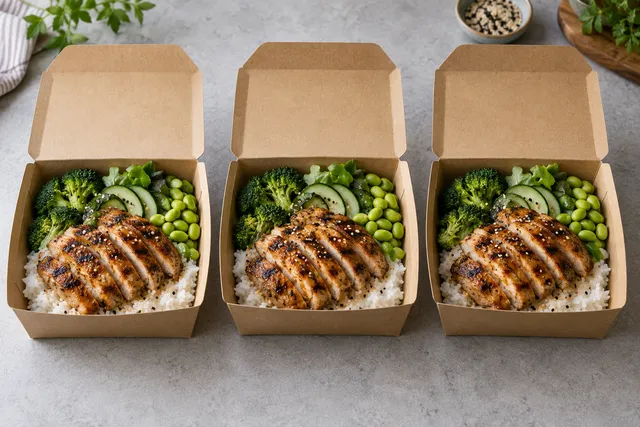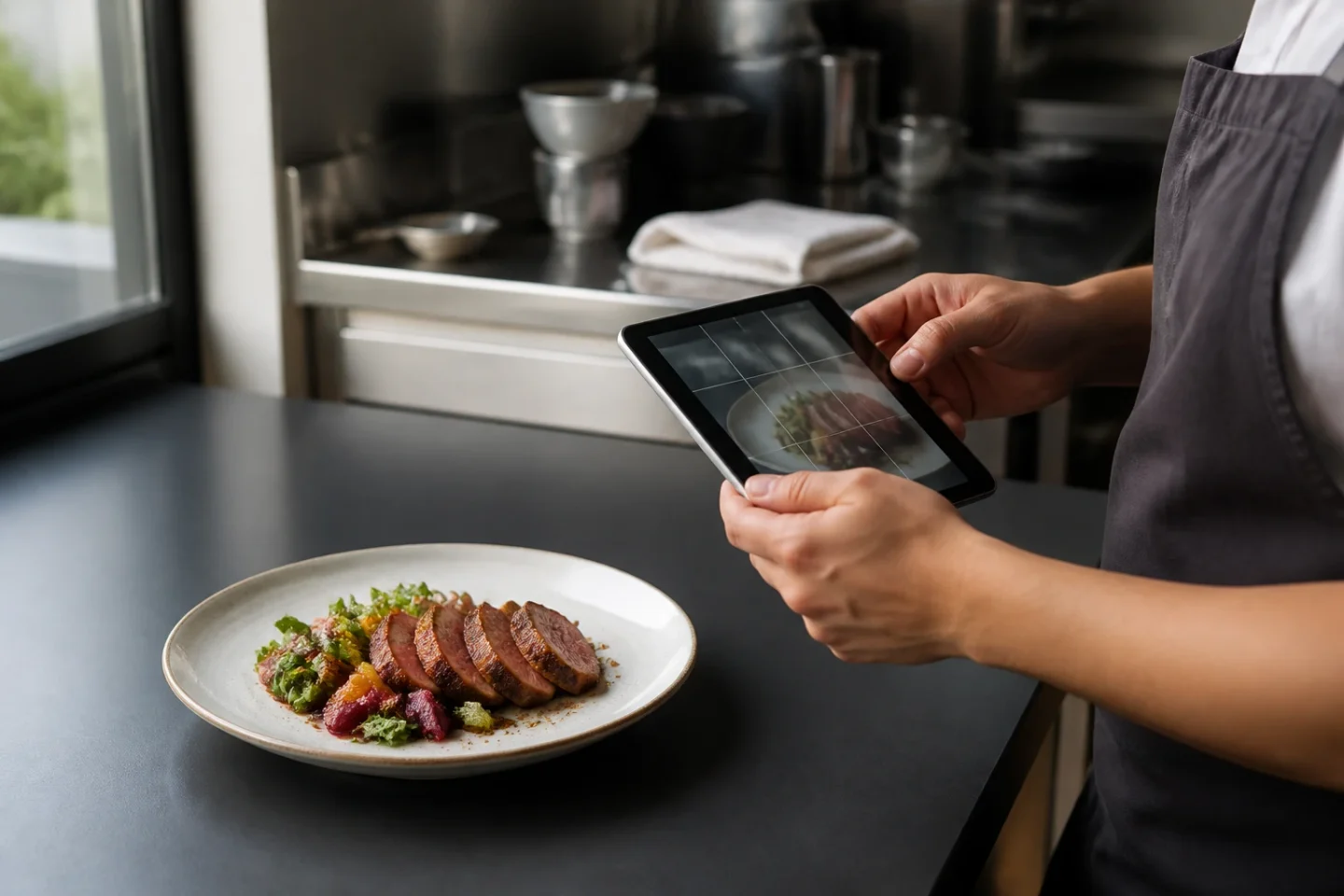
For a restaurant profile image for Zomato, use a square master 1024×1024 or larger as a FoodPhoto working recommendation, not a Zomato profile minimum, center the logo, and leave enough safe margin for circular crops. This is the restaurant logo/avatar, not the wider cover image or dish grid.
Three image types on Zomato
- Profile / logo — circular or square crop; simple mark, high contrast
- Cover / banner — wider hero; avoid tiny text
- Menu dish photos — delivery thumbnail rules (see size guide)
Practical profile rules
- Export a square master at high resolution (1024×1024 or larger as a FoodPhoto working recommendation, not a Zomato profile minimum)
- Keep the logo centered with safe margin — circular crops cut corners
- If the source logo is not square, place it on a square canvas before exporting so the full mark stays inside the safe margin
- No thin scripts or low-contrast icons on busy food backgrounds
- Test on a real phone before publishing
Related Zomato specs
Need dish photos that match your brand after the profile is fixed? Start on FoodPhoto.ai.
A production-ready method for Zomato restaurant profile and cover images
Practical answer: Build separate logo, cover and dish assets with safe margins. Optimize for brand recognition without confusing a logo for a menu item, then reject any output that makes the menu less accurate. The main avoidable risk is simple: a profile asset has a different job from an item photo. This workflow gives a restaurant team an auditable way to move from source photo to approved asset without turning visual polish into an unsupported promise.
Keep logos, environmental covers and individual dishes in separate source folders to prevent upload mistakes.
Step-by-step operating workflow
Start with a high-resolution source rather than designing directly at the smallest upload size. Photograph one real item in soft light, leave breathing room around the dish, and avoid promotional text, logos or decorative objects that can become confusing after a crop. The master should remain useful if Zomato changes its display treatment later.
- Verify the item. Put the source photo beside the recipe or current menu build. Confirm portion, visible ingredients, container and garnish before any enhancement.
- Prepare a neutral master. Correct exposure and color while keeping edges, texture and scale believable. Do not add food that was not photographed.
- Export for the live channel. Use the current merchant guidance for Zomato; do not rely on an old screenshot or a universal “best size.”
- Preview the customer crop. The upload succeeding is not enough. Open the live listing on a narrow phone and make sure the dish is still obvious.
- Release a small batch. Fix a representative set before replacing an entire menu, then document acceptance and crop failures for the next batch.
Release checklist
| Gate | Pass condition | How to verify |
|---|---|---|
| Source truth | Dish, portion and packaging match service | Compare with the current recipe build |
| Crop safety | Main food stays inside the central safe area | Preview every live ratio used by Zomato |
| Small-screen clarity | The item is recognizable before reading its name | Review at actual listing size on a phone |
| Moderation | No unsupported text, marks or misleading composites | Check the current merchant requirements |
| Operations | Source, approved master and export are recoverable | Store a versioned filename and approval date |
How to evaluate the result without inventing a success claim
Preview profile and cover assets on both narrow and wide screens before publishing. Hold price, availability, promotion and service window as stable as practical. Record the dates and sample size, and describe the result as an observation from that test—not as a universal promise. If several things changed together, the data cannot isolate the photo.
Useful process metrics are approval rate, attempts per approved image, time from capture to publication, rejection rate and the share of live menu items with current imagery. Commercial metrics can include item views, add-to-cart actions or orders when the platform exposes them, but seasonality and promotions must stay in the interpretation.
Accuracy, rights and update policy
Use photos the restaurant owns or is licensed to modify. Do not copy a competitor’s dish, branding or protected campaign image. Keep the food representative of what a customer can order, disclose material synthetic changes when the context requires it, and remove an image when the recipe, portion, vessel or packaging no longer matches.
Primary reference: Review Zomato for Business before the final export. Platform rules can change, and the active merchant interface wins if it differs from an older article.
Editorial review: This operating guidance was reviewed on August 21, 2026. It avoids promised rankings or sales outcomes and should be rechecked against the live channel before a bulk upload.
Put the workflow into practice
Start with one representative dish in FoodPhoto Studio, compare the result with the original, and review real transformation examples before standardizing a look. For a larger catalog, estimate approved-image cost from the current FoodPhoto pricing and include staff review time in the calculation.
Zomato integration photo gates
The official POS menu-integration documentation lists JPEG/PNG photo media, a file smaller than 15 MB and a minimum of 400 × 400 px. Integration URLs must be publicly accessible and the image domain accepted by Zomato. Checked October 2, 2026. This is the integration upload path, not a universal logo, profile or manual-account rule.
Use the verified Zomato reference, then confirm your own upload field. A larger working master is a FoodPhoto recommendation.
Preview a circular profile crop

This owned-brand HTML example illustrates the center-safe area; it is not a Zomato interface screenshot or upload validator. Keep the logo away from the corners and preview the actual profile crop in the merchant interface. A 1024×1024 master is a FoodPhoto workflow recommendation, not an official profile minimum. No universal profile file cap is claimed here.
Check the current Zomato upload
Zomato’s developer documentation and policies are the primary starting points. A recommended working master in this guide does not establish the minimum, aspect ratio or file cap for a particular merchant field. Check the live account before exporting.